
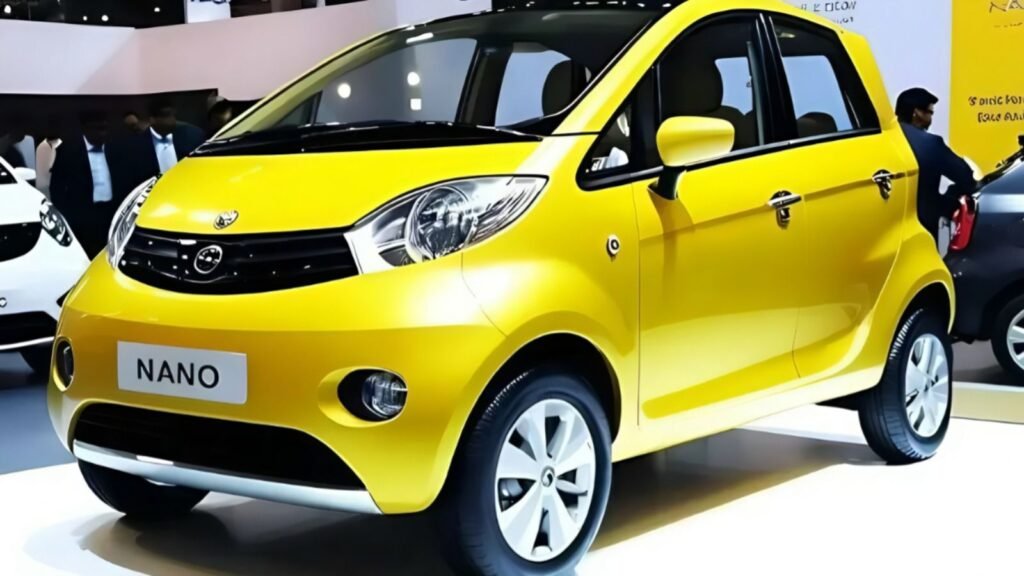
The name Nano has always carried a special emotional weight in India’s automotive history. When Tata Motors first introduced the Nano, it redefined the idea of affordable mobility and brought four-wheel transportation within reach of millions of families. Now, years later, discussions and industry chatter around the Tata Nano Electric 2026 have once again placed this iconic name in the spotlight. This time, however, the comeback is expected to align with India’s rapidly growing electric vehicle ecosystem.

The idea of a Tata Nano Electric 2026 is significant not just because of nostalgia, but because of timing. Electric vehicles in India are gaining traction, yet affordability remains the biggest hurdle. While Tata Motors has already established itself as a leader in electric mobility with models like the Tiago EV, Tigor EV, and Nexon EV, there is still a clear gap at the entry level. A compact, city-focused electric car based on the Nano platform could potentially bridge that gap.
If the expectations surrounding the Tata Nano Electric 2026 are met, this car could once again change how Indians view personal mobility—this time by making electric cars practical, approachable, and genuinely affordable.
Tata Nano Electric 2026 Overview
Before diving deeper into design, performance, and market impact, it helps to look at a simplified overview of what the Tata Nano Electric 2026 is expected to offer based on current discussions and industry trends.
| Category | Expected Details |
|---|---|
| Model Name | Tata Nano Electric 2026 |
| Body Type | Compact Electric Hatchback |
| Motor Output | Approx. 60–80 BHP |
| Driving Range | Up to 300–400 km (expected real-world) |
| Charging | Standard + Fast Charging Support |
| Seating Capacity | 4 Adults |
| Target Market | Urban Families, First-Time Buyers |
| Expected Price | Entry-Level EV Segment |
| Usage Focus | City Commuting |
This overview highlights why the Tata Nano Electric 2026 is generating so much attention—it aims to deliver essential electric mobility without unnecessary complexity.
Design Philosophy: Compact, Modern, and Purpose-Driven
The original Nano was known for its simplicity, but design expectations have changed significantly over the years. The Tata Nano Electric 2026 is expected to adopt Tata Motors’ newer design language, which focuses on clean surfaces, bold details, and a confident road presence.
While retaining its compact footprint, the Tata Nano Electric 2026 is likely to look far more modern than its predecessor. A closed front grille, a signature element of electric vehicles, is expected to dominate the front profile. Sleek LED headlamps, integrated daytime running lights, and a prominent Tata logo could help the car feel aligned with Tata’s current EV lineup.
Despite its small size, careful styling could give the Tata Nano Electric 2026 a more premium and confident appearance, helping it shed the “cheap car” perception of the past.
Exterior Design: Small Size, Big Improvements
The exterior of the Tata Nano Electric 2026 is expected to focus on practicality while incorporating modern visual upgrades. Smooth body panels, improved aerodynamics, and better panel fitment are likely areas of improvement.
Higher ground clearance suited to Indian road conditions could make the car more versatile than before. Wider tyres and revised suspension geometry may enhance stability, especially during city driving and occasional highway use.
Improved build quality will be a crucial factor. Tata Motors has significantly raised its safety and construction standards in recent years, and the Tata Nano Electric 2026 is expected to benefit from this progress.
Interior Layout: Simple, Functional, and Urban-Friendly
Inside the cabin, the Tata Nano Electric 2026 is likely to follow a minimalist approach focused on functionality. While luxury features may be limited to keep costs low, essential comfort and convenience elements are expected to be included.
The dashboard layout could feature a compact digital instrument cluster displaying speed, battery status, and driving range. Smart storage spaces, flat seating, and improved cabin materials would make daily usage more comfortable.
For city users, easy ingress and egress, decent headroom, and adequate legroom for four occupants could make the Tata Nano Electric 2026 surprisingly practical despite its compact dimensions.
Electric Powertrain and Performance
Performance expectations around the Tata Nano Electric 2026 have sparked widespread discussion. While early online claims mention very high output figures, a more realistic expectation would place the electric motor output in the 60–80 BHP range.
This level of power would be more than sufficient for city driving. Electric motors deliver instant torque, which means the Tata Nano Electric 2026 could feel quick off the line in traffic, making daily commutes smooth and stress-free.
Acceleration would likely be tuned for efficiency rather than outright speed. A balanced setup would ensure predictable handling, low energy consumption, and long-term reliability.
Driving Range and Battery Efficiency
Driving range is one of the most critical factors for electric car buyers, and it is also the most discussed aspect of the Tata Nano Electric 2026. While extremely high range figures circulating online should be viewed cautiously, Tata Motors’ experience with EVs suggests a practical approach.
A real-world driving range of around 250–350 km on a single charge would already make the Tata Nano Electric 2026 highly competitive in the entry-level EV space. Such a range would comfortably cover daily commutes, errands, and short intercity trips.
Efficient battery management systems, regenerative braking, and lightweight construction could help maximize usable range and reduce charging frequency.
Charging Options and Daily Convenience
Charging convenience will play a major role in the success of the Tata Nano Electric 2026. Standard home charging support is expected, allowing owners to charge overnight using a regular power connection.
Fast charging compatibility could also be offered, enabling quicker top-ups at public charging stations. For urban users, this flexibility could make electric ownership far more practical.
Lower charging costs compared to petrol or diesel vehicles would significantly reduce running expenses, reinforcing the Nano’s original promise of affordable mobility—now in electric form.
Mileage Equivalent and Running Costs
While electric cars don’t have traditional mileage figures, the Tata Nano Electric 2026 is expected to deliver extremely low cost per kilometre. Compared to petrol hatchbacks, daily running expenses could be reduced dramatically.
This makes the Tata Nano Electric 2026 attractive for:
-
Office commuters
-
Small families
-
Delivery and fleet usage
-
First-time car buyers
Over time, the savings on fuel and maintenance could outweigh the initial purchase cost, especially for high-usage urban drivers.
सम्बंधित ख़बरें





Features Focused on Practical Use
The feature list of the Tata Nano Electric 2026 is expected to prioritize essentials rather than luxury add-ons. Key expected features include:
-
Power steering
-
Air conditioning
-
Digital instrument display
-
Power windows
-
Central locking
-
Basic infotainment support (variant-based)
By focusing on practical features, Tata Motors could keep the car affordable while still meeting modern expectations.
Safety and Structural Improvements
Safety was one of the biggest criticisms of the original Nano. With the Tata Nano Electric 2026, Tata Motors is expected to address this concern seriously.
Stronger body structure, improved crumple zones, seatbelt reminders, and compliance with current safety regulations could make the car far safer than its predecessor.
Even basic safety improvements could significantly improve buyer confidence and long-term acceptance.
Expected Price and Market Disruption
Pricing is where the Tata Nano Electric 2026 could truly change the game. While exact figures remain unconfirmed, the aim is clearly to make electric mobility accessible to a much wider audience.
If Tata Motors manages to price the Tata Nano Electric 2026 aggressively within the entry-level EV bracket, it could attract:
-
Budget-conscious families
-
Two-wheeler owners upgrading to cars
-
Shared mobility operators
Affordable EMIs and low running costs would further strengthen its appeal.
Market Context and Competition
Currently, there are very few true entry-level electric cars in India. Most EVs remain priced beyond the reach of many households. The Tata Nano Electric 2026 could occupy a unique space by offering a compact, affordable alternative designed specifically for Indian conditions.
Its success could encourage other manufacturers to explore similar budget EV concepts, accelerating electric adoption across the country.
Sales Potential and Long-Term Impact
Given Tata Motors’ strong EV reputation and wide service network, the Tata Nano Electric 2026 has the potential to become a high-volume product if positioned correctly.
It could play a crucial role in:
-
Reducing urban pollution
-
Increasing EV adoption
-
Offering affordable four-wheel mobility
Just as the original Nano aimed to transform transportation, its electric successor could redefine the future of budget cars in India.
Final Verdict: Tata Nano Electric 2026
The Tata Nano Electric 2026 represents more than just a product revival—it symbolizes a shift toward inclusive electric mobility. By combining compact dimensions, practical features, low running costs, and Tata’s growing EV expertise, it has the potential to become a landmark vehicle once again.
If Tata Motors delivers on safety, pricing, and real-world usability, the Tata Nano Electric 2026 could make electric cars a reality for millions of Indian families—not as a luxury, but as a sensible everyday choice.
Disclaimer
This article is based on industry discussions, market expectations, and publicly available information. Tata Motors has not officially confirmed specifications, pricing, or launch details of the Tata Nano Electric 2026. Actual features and performance may vary at launch.